
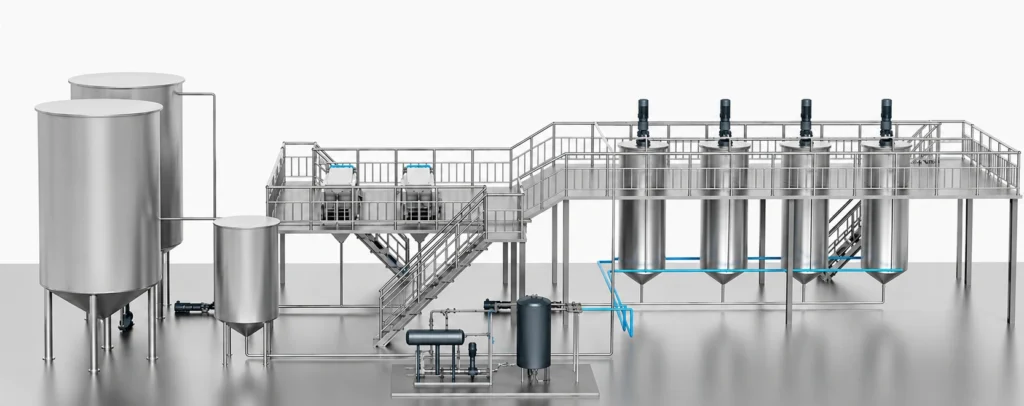
Introduction
The demand for natural, high-quality, and sustainable ingredients has significantly increased across the cosmetic, personal care, and pharmaceutical industries. Among these ingredients, natural waxes have become essential raw materials because of their ability to improve texture, stability, and sensory performance in cosmetic formulations.
Natural waxes are widely used in products such as lip balms, creams, makeup products, hair care formulations, and skin protection products. They provide structure, improve consistency, enhance product stability, and create a smooth feeling on the skin.
One of the most effective industrial methods for producing high-quality natural wax fractions is the dewaxing process, also known as winterization. This technology separates wax compounds from oils and plant extracts through controlled cooling, crystallization, and filtration.
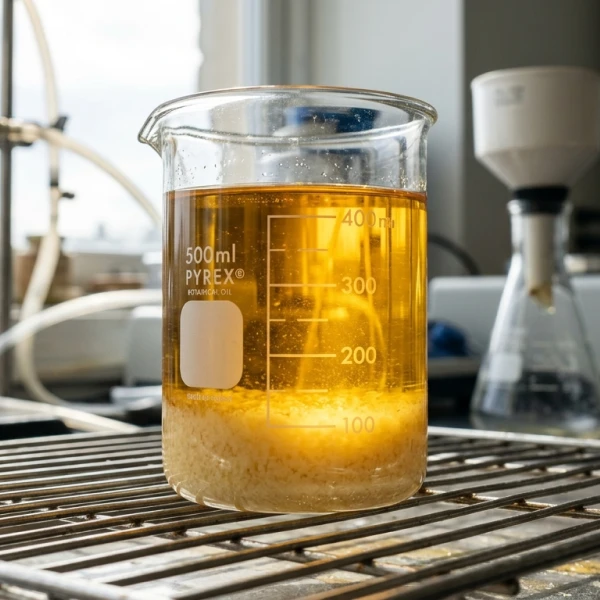
What Is Dewaxing?
Dewaxing is a purification process designed to remove naturally occurring wax compounds from oils, fats, and botanical extracts.
Many vegetable oils contain natural waxes as part of their composition. These waxes may cause cloudiness, sediment formation, or instability when the oil is exposed to low temperatures. Removing these compounds improves the clarity, purity, and performance of the final product.
However, dewaxing is not only a purification step. The separated wax fraction itself is a valuable natural ingredient that can be collected, refined, and used in different industries.
Why Is the Dewaxing Process Important?
Natural wax molecules usually have higher melting points compared with the liquid oil phase. By carefully controlling temperature conditions, manufacturers can force these wax components to solidify while keeping the oil phase liquid.
The main objectives of dewaxing are:
- Increasing oil transparency
- Improving cold stability
- Removing unwanted solid particles
- Producing a valuable natural wax fraction
- Creating cleaner raw materials for sensitive applications
The process is especially important for industries where ingredient quality and consistency are critical, such as cosmetics and personal care.
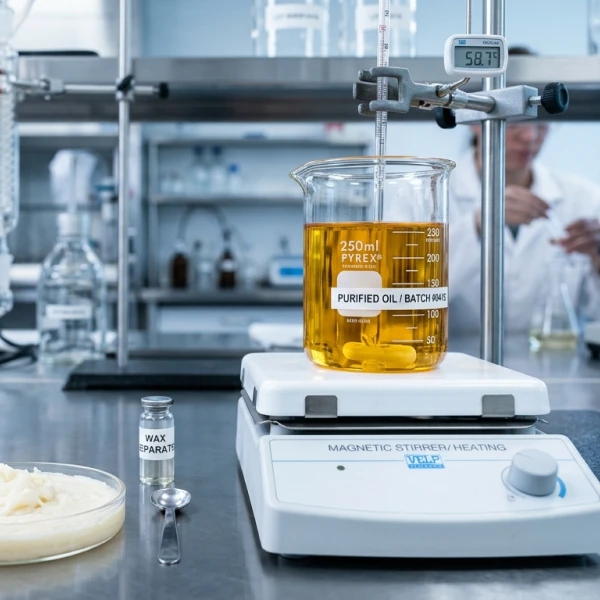
How Does the Winterization Process Work?
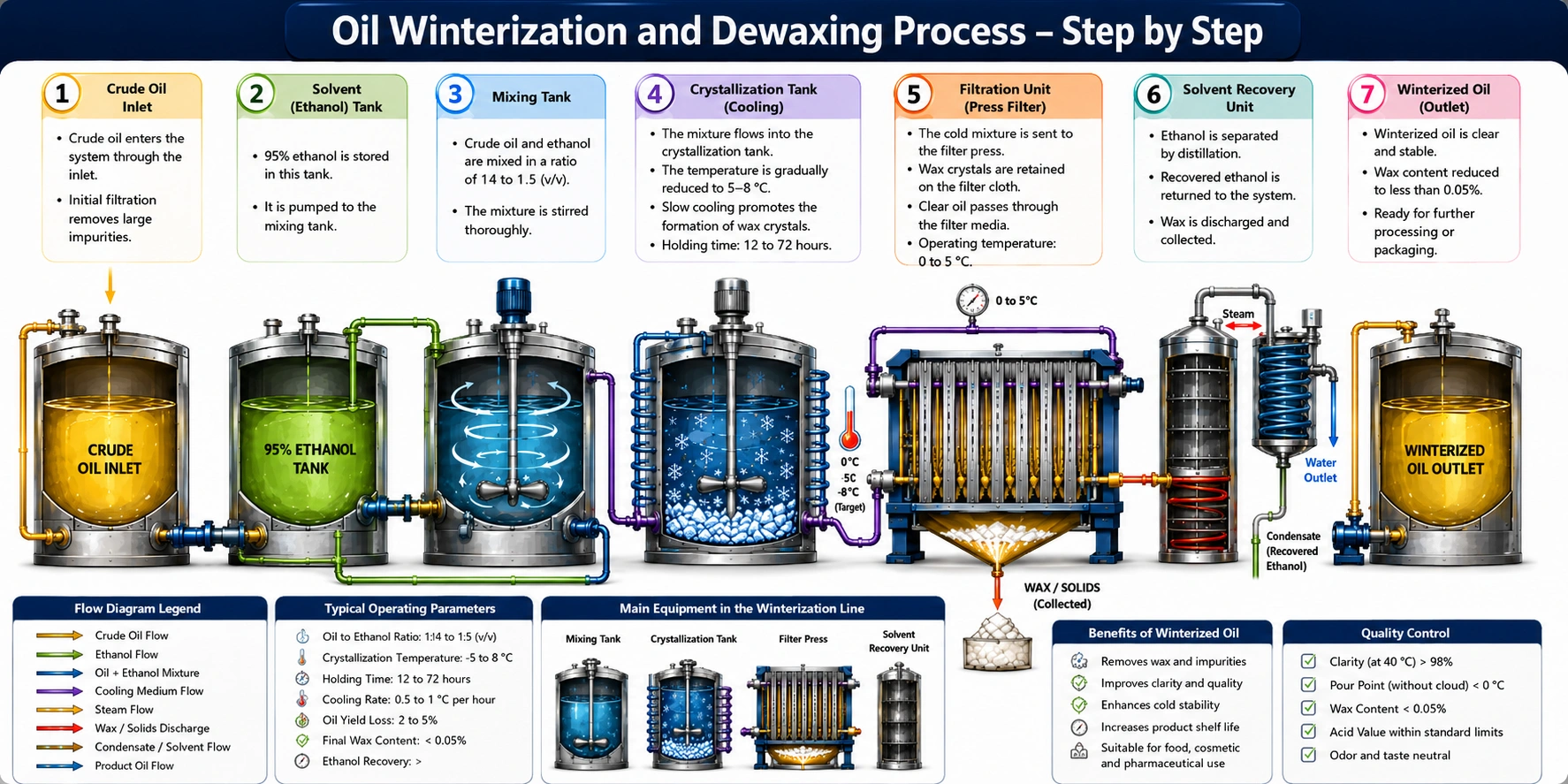
Industrial winterization is based on controlled crystallization and separation.
1. Preparation of the Raw Material
The process begins with a crude or partially refined oil, such as vegetable oil or botanical extract.
Before entering the winterization system, the raw material is usually filtered or pre-treated to remove impurities and improve process efficiency.
2. Mixing with Ethanol
In solvent-based winterization systems, the oil is mixed with a polar solvent, commonly high-purity ethanol.
Ethanol helps modify the solubility behavior of different compounds and supports the formation of wax crystals during cooling.
The oil and ethanol mixture is transferred into a crystallization vessel where temperature conditions can be precisely controlled.
3. Controlled Cooling and Crystallization
The mixture is slowly cooled to a low temperature.
During this stage, wax molecules lose their solubility and begin forming solid crystals.
The cooling rate is a critical factor. Slow and controlled cooling allows larger wax crystals to form, making the separation process more efficient.
Typical industrial winterization systems maintain low temperatures for several hours to allow complete crystallization.
4. Filtration and Wax Separation
After crystallization, the cold mixture enters the filtration stage.
Industrial filtration equipment such as:
- Filter presses
- Leaf filters
- Centrifugal separators
are used to separate wax crystals from the liquid oil phase.
The final output includes:
- Winterized oil with improved clarity and stability
- Natural wax fraction collected from the filtration stage
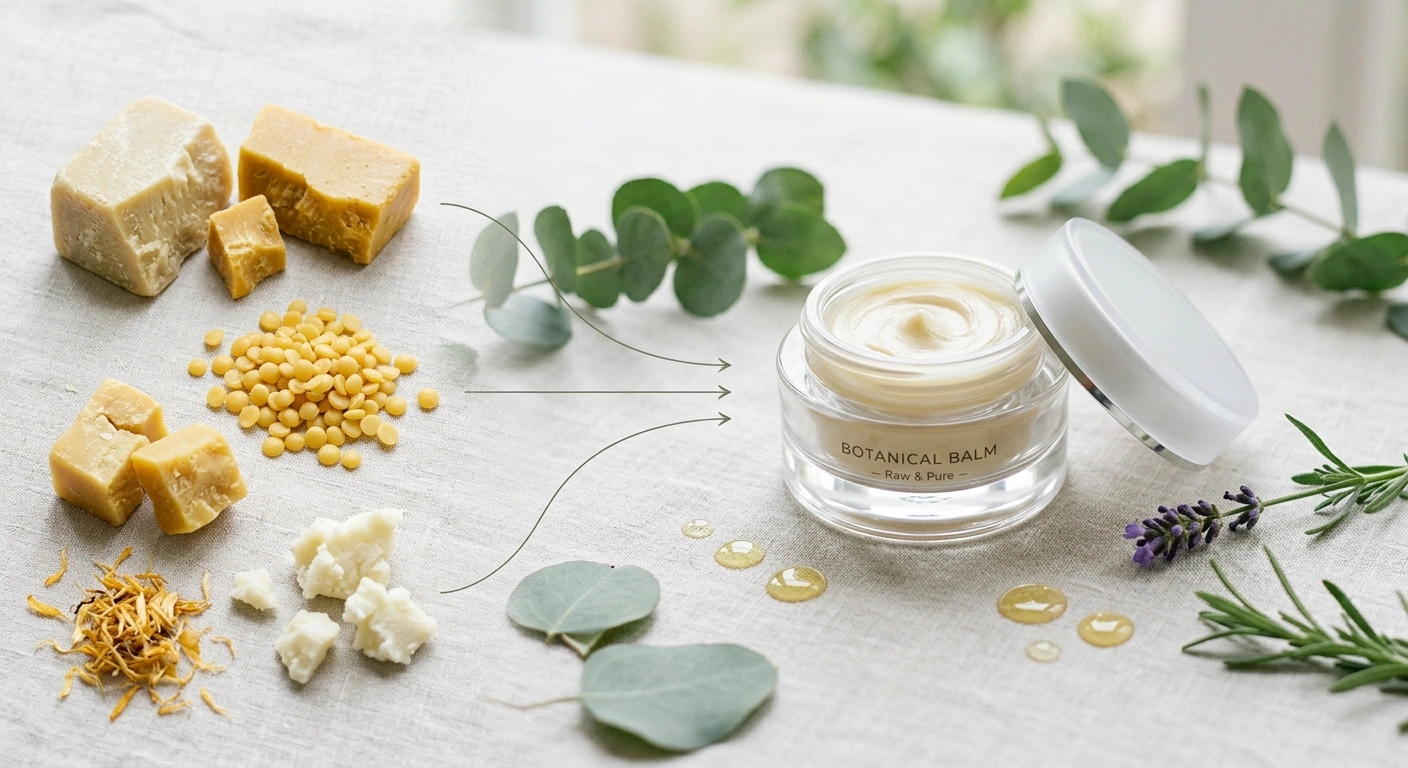
Why Do Cosmetic Manufacturers Need Natural Wax?
The cosmetic industry increasingly focuses on natural-origin ingredients, clean formulations, and sustainable sourcing.
Natural waxes offer several advantages:
1. Better Product Structure
Waxes help control viscosity and create the desired texture in cosmetic products.
They can transform liquid oils into stable creams, balms, and solid formulations.
2. Improved Skin Feel
High-quality natural waxes contribute to a smooth, elegant, and non-greasy sensory experience.
This is especially important for premium skincare and cosmetic brands where consumer perception plays a major role.
3. Increased Product Stability
Waxes help improve the physical stability of formulations by strengthening the internal structure and reducing separation between ingredients.
4. Consumer Demand for Natural Ingredients
Many brands are moving away from petroleum-derived ingredients and looking for plant-based alternatives.
Natural waxes extracted from botanical sources support clean beauty concepts and environmentally conscious product development.
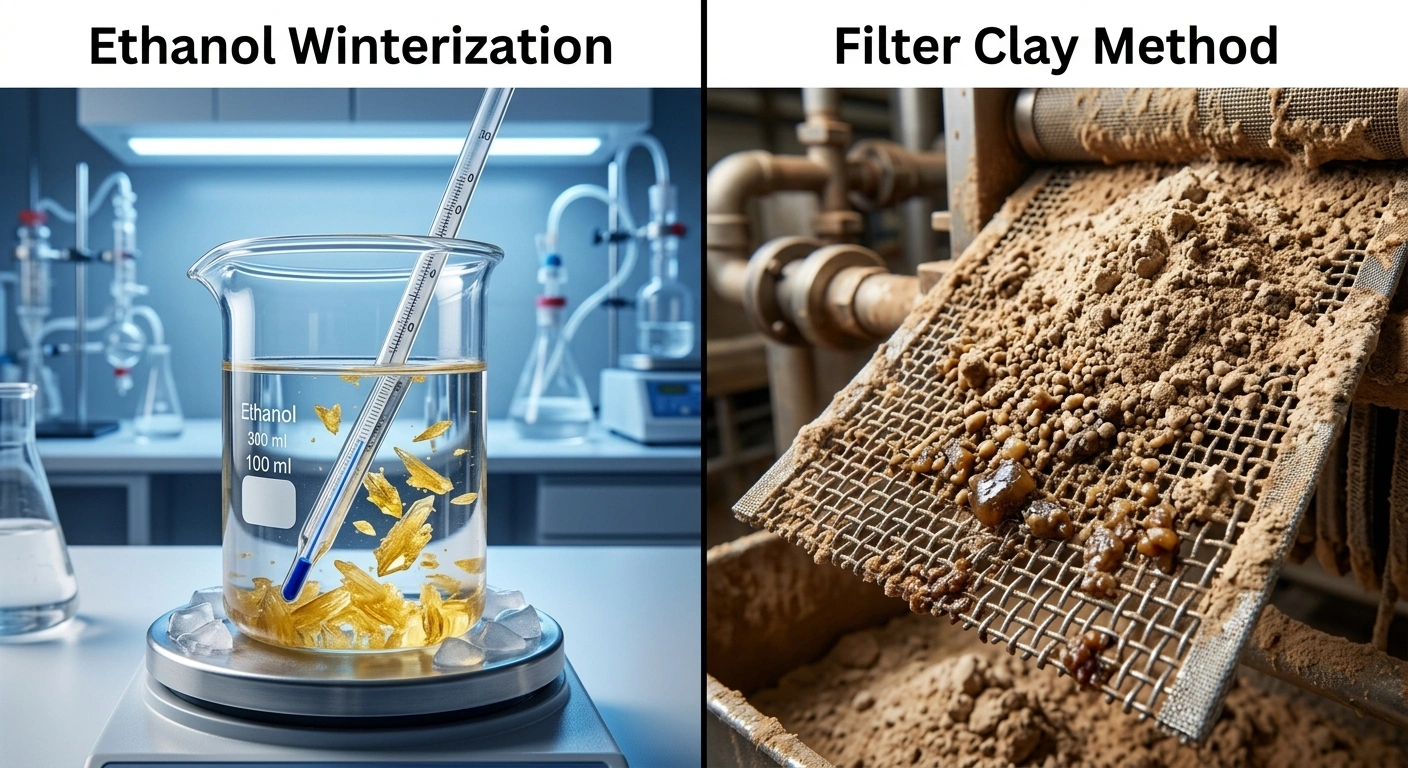
Dewaxing Wax vs. Wax Obtained Through Filter Clay Methods
Traditional wax separation methods often use filtration aids such as diatomaceous earth or other mineral materials.
In these systems, the filtration material helps capture solid particles, but it may affect wax purity and requires additional purification steps.
The main differences are:
Feature
Separation method
Purity
Process control
Cosmetic suitability
Solvent recovery
Ethanol Winterization Wax
Controlled crystallization and filtration
Higher controlled purity
Precise temperature-based control
More suitable for premium formulations
Possible with industrial systems
Filter Clay Wax
Adsorption and filtration
May contain mineral residues
More dependent on filtration conditions
Requires additional refining
Usually not applicable
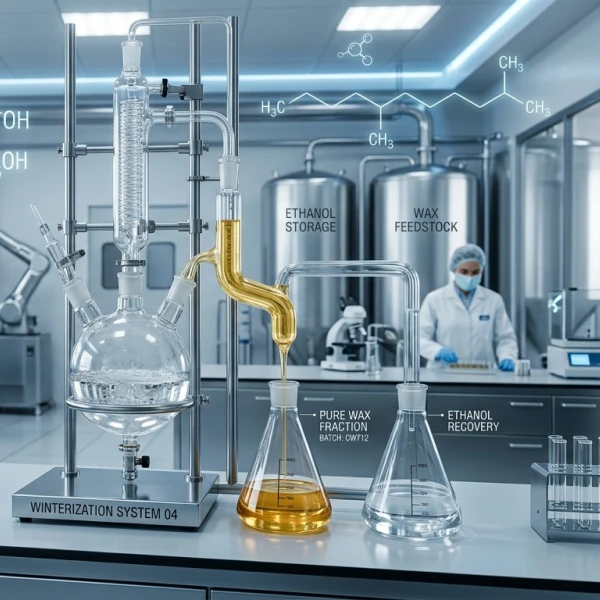
Why Is Ethanol-Based Winterization Preferred for Cosmetic-Grade Wax?
Ethanol-based winterization provides better control over the separation process.
The advantages include:
- Higher wax purity
- Better consistency between production batches
- Reduced unwanted residues
- Better control of melting characteristics
- Suitable quality for sensitive cosmetic applications
In industrial systems, ethanol can also be recovered and reused, improving process efficiency.
The Future of Natural Wax Production
As cosmetic manufacturers continue moving toward sustainable and plant-based ingredients, advanced dewaxing technologies are becoming increasingly important.
Winterization allows producers to convert naturally occurring wax compounds from oils and botanical sources into valuable functional ingredients.
The result is a high-quality natural wax that supports modern cosmetic formulations while meeting the growing demand for cleaner and more sustainable raw materials.
References
- Oil Dewaxing Winterization – Technical Process Overview
- SOPHIM – Natural Vegetable Waxes for Cosmetics
- Rollce Engineering – Dewaxing and Winterization Technology
- Industrial Winterization Process Documentation – Oil Processing Technologies
- Internal technical reference: Oil Dewaxing Winterization Process Report (Industrial Winterization System Overview)